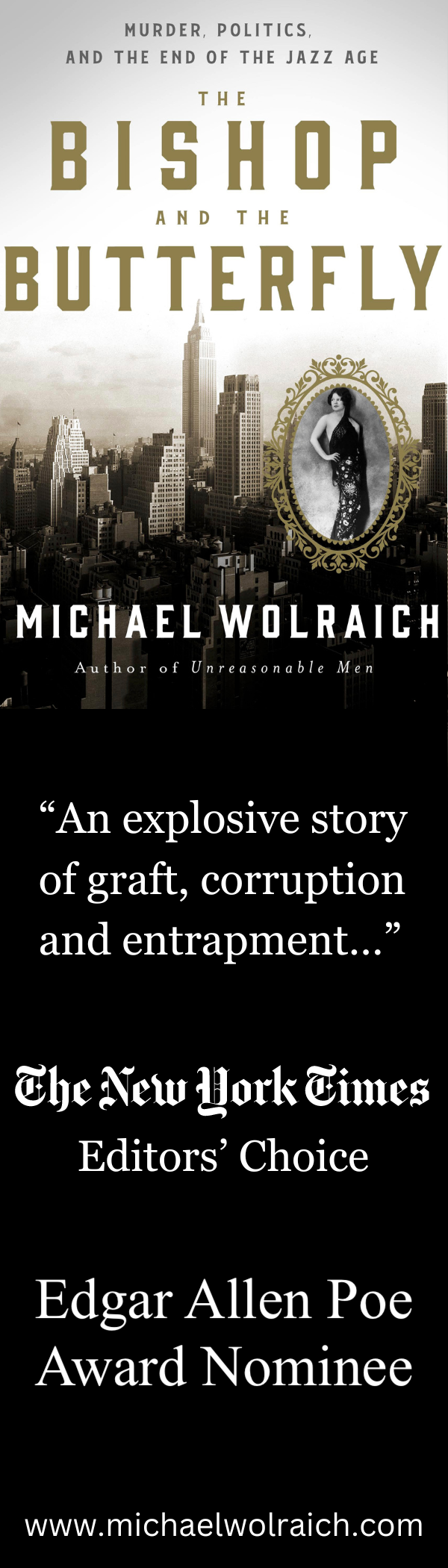
Wolraich: Obama at the Gates of... Gates
Dr. C: In Praise of Writing Binges
Maiello: Gatsby Doesn't Grate
|
Wolraich: Obama at the Gates of... Gates Dr. C: In Praise of Writing Binges Maiello: Gatsby Doesn't Grate |
Blowing |
When I got my first job, I also got a book of advice for new professors. It gave me some sensible-sounding advice about writing. Avoid binge writing, it said. Write at regularly scheduled hours and keep each session brief. Too many graduate students are used to writing in crazy binges, the authors said, rather than developing steady writing habits. Faculty had to learn to write all the time, and also had to learn to STOP writing even if things were going well. And I tried to take that advice seriously. I have always believed in good writing habits and deplored the way graduate school undermines those habits. I drank the no-binge Kool-Aid with a smile, in an appropriately moderate serving. But that advice is fundamentally wrong. [Read more]
Fitzgerald’s novel, The Great Gatsby, is a fable. It is not a fable now, years after it was written. Fitzgerald structured it as a fable and intended it to be read as such. Its original title was Trimalchio in West Egg. Gatsby is based on a party-thrower created by the Greek satirist Petronius. So, when I hear people talking about Gatsby almost as if it’s reportage on Jazz Age America, I think that they are reading the wrong book. Fitzgerald is not Tom Wolfe or Theodore Dreiser. In creating Gatsby, he worked in the manner of Shakespeare, taking his inspiration from ancient and timeless source material. [Read more]
Seth MacFarlane hosted a slow-motion catastrophe of an Oscars broadcast Sunday night. His terrible performance immediately sparked two internet conversations: one about what a terrible Oscars host Seth MacFarlane was, and a second about who had, if anyone, been an even more terrible Oscars host. Many people were insulted by MacFarlane's sexist hostility. And I was, too. [Read more]
When the first televised Academy Awards ceremony took place on March 19, 1953, I, a bedazzled 15-year-old movie fan, sat in front of our black and white TV set, riveted and no doubt pledging to never forget that moment as long as I lived. Since then I have never (and I mean NEVER) missed a telecast. [Read more]
Brazilian actor/filmmaker Ariel Goldemberg was born with two things – Down Syndrome and a love of cinema. The cinemaphile has finished his first movie, which combines these things – the critically acclaimed “Colega” – and is now after the finishing touch for his movie – to have his hero Sean Penn watch the movie with him. [Read more]
So David Mamet decided that he had to weigh in on gun laws, and tell everyone that everyone should have lots of guns all the time. [Read more]
I've started a new non-political blog at WordPress and this is one of my posts there. Come on over and check it out!
Oh, no. Sybil [Read more]
It's January 1, which means it's the day that works whose copyright has expired enter the public domain. Here's the list of works that entered the public domain in the United States today:
Nothing. Nada. Not a thing.
 [Read more]
Every ten years the British magazine Sight and Sound polls various cineastes to learn what they consider to be the greatest movie of all time. In 2012, Alfred Hithcock's Vertigo unseated Orson Welles' Citizen Kane which had been selected first in each poll conducted since 1962. Jean Renoir's 1939 classic La Regle du jeu (Rules of the Game) came in fourth. Below, I explain why I believe Renoir's film is demonstrably superior to Vertigo. [Read more]
At 78, Roth says he hasn't written anything of substance in 3 years and that 2010's Nemesis will have been his last novel. Oddly enough, I picked up P [Read more]
I had a bout with bronchial pneumonia this week, which left me breathless enough to now be able to cross "ambulance ride" off of my bucket list. I spent two days in the hospital and, while I feel almost human again, a strange thing has happened. When I sit down to write, I'm finding that the last thing I want to write about is the current political situation.
 [Read more]
Raymond Chandler’s legendary private eye, Philip Marlowe, will be back in bookstores next year. Chandler’s estate has authorized a new Marlowe novel from John Banville, alias Benjamin Black. But the real news is not that Banville gets to write the book. It’s that no one else is allowed to write one.
 [Read more]
What better novel for Labor Day weekend than Joshua Ferris's brilliant debut, And Then We Came to the End? It's truly the Labor-Day read for our time. It's formally masterful its first-person-plural narration, with a collective officeplace "we" who does the narrating, like this:
 [Read more]
Well, it's that time of year. Fall classes are about to begin, or have begun, and I'm definitely sure I saw at least one batch of red leaves this week.
So, with that anticipatory autumn sadness in the air, my book recommendation this week is Paul Murray's novel Skippy Dies, set in an Irish high school. If the title hasn't spoiled it for you already, the title character meets his demise in the first few pages:
 [Read more]
I'm going to start a semi-regular series of "recommended weekend reading" posts. My recommendations will inevitably be all over the place, and I don't expect to focus on anything except things I happen to like. Ideally, each installment would have both a book recommendation and a link to a short story or poem available (with the author's permission) on the web.
So, in honor of the recent landing of the Curiosity rover on Mars, let me start by recommending Kim Stanley Robinson's Mars Trilogy, starting with Red Mars.
 [Read more]
I just read David Denby's lukewarm review of Spike Lee's Red Hook Summer (subscription required) in which Denby calls the movie a failure but praises Lee as being one of the few filmmakers out there who would ask the kind of question about faith that he posed in the movie. I haven't seen the movie and don't know that I will. I don't watch every Spike Lee Joint the way I watch every movie made by Woody Allen. But I do pay attention to him and some of his earlier films, especially Do The Right Thing, Jungle Fever, School Daze and Malcolm X were important movies in my younger years. [Read more]
On the strength of Mary Ann Johanson's 4-star review of Christopher Nolan's The Dark Knight Rises in the Monterey Weekly, http://www.montereycountyweekly.com/news/2012/jul/19/dark-knight-rises/, I did something for the first time since the releases of Gran Torino and Mystic River, I bought a ticket to see a non-arthouse film. Given Johanson's expansive rave, I was expecting not only a cinematographic tour-de-force of but also scathing social commentary decrying the overlordship of New York, er Gotham, City by financial robber barons.
Instead, I suffered through a bombastic, repetitive, over-long, and occasionally incoherent fascist fantasy. I have not seen the first two Dark Knights, so at least some of my confusion may be due to unfamiliarity with details in the previous films. To be fair, I'll concentrate here on my problems with Dark Knight Rises that could not result from ignorance of its predecessors and conclude with a critique of its retrograde politics. [Read more]
Last night, twelve people died in senseless gun violence at a midnight showing of the new Batman movie.
Batman, of course, is a character who is a lunatic vigilante, and so some crazy people identify with that fantasy figure in the wrong way. Batman is also a character who has lost his parents to senseless gun violence. (They were killed on a family outing to the movies.) It's an authoritarian vigilante fantasy about stopping people from shooting each other.
 [Read more]
Have you heard, this new movie, the Batman movie -- what is it, the Dark Knight Lights Up or something? Whatever the name of it is. That's right, Dark Knight Rises, Lights Up, same thing. Do you know the name of the villain in this movie? Bane. The villain in the Dark Knight Rises is named Bane. B-A-N-E. What is the name of the venture capital firm that Romney ran, and around which there's now this make-believe controversy? Bain. The movie has been in the works for a long time, the release date's been known, summer 2012 for a long time. Do you think that it is accidental, that the name of the really vicious, fire-breathing, four-eyed, whatever-it-is villain in this movie is named Bane?" - Rush Limbaugh
Here's hoping Dev Patel survives the monstrosity that is "The Newsroom." [Read more]
By James Dao, New York Times, May 18/19,2013
[....] As of Monday, just under 600,000 claims qualified as backlogged, meaning they had been pending for over 125 days.
Though the numbers have grown, delays in processing disability claims are nothing new, and neither are complaints about the backlog. Just last year, some veterans advocates tried to make the backlog a presidential campaign issue. They failed. But this year, something changed: the criticism grew louder and perhaps more partisan, and began reaching a wider audience.
A new conservative-leaning nonprofit organization, Concerned Veterans...
By Hunter Walker, TPM Muckraker, May 20, 2013
In a scathing new report Monday, the Department of Justice’s Office of the Inspector General accused onetime Arizona U.S. Attorney Dennis K. Burke of leaking confidential documents to a reporter in a politically-motivated attempt to “undermine” a whistleblower who helped spark the investigation into the “Fast and Furious” operation.
Burke, a former aide to Janet Napolitano while she was Arizona governor and then secretary of Homeland Security, was appointed as U.S. attorney by President Obama in 2009. He resigned as he was initially being questioned about the leak in 2011.
The Inspector General...
By Brian Stelter and Michael D. Shear, New York Times, May 20/21, 2013:
The White House on Monday defended President Obama’s support for aggressive investigations into national security leaks despite new disclosures about a 2009 case in which the Justice Department searched a reporter’s personal e-mails and attempted to track his movements.
Details of the government’s investigation of the reporter, James...
Even by the standards of the TED conference, Henry Markram’s 2009 TEDGlobal talk was a mind-bender. He took the stage of the Oxford Playhouse, clad in the requisite dress shirt and blue jeans, and announced a plan that—if it panned out—would deliver a fully sentient hologram within a decade. He dedicated himself to wiping out all mental disorders and creating a self-aware artificial intelligence. And the South African–born neuroscientist pronounced that he would accomplish all this through an insanely ambitious attempt to build a complete model of a human brain—from synapses to hemispheres—and simulate it on a supercomputer. Markram was proposing a project that has bedeviled AI researchers for decades, that most had presumed was impossible. He wanted...