
MURDER, POLITICS, AND THE END OF THE JAZZ AGE
by Michael Wolraich


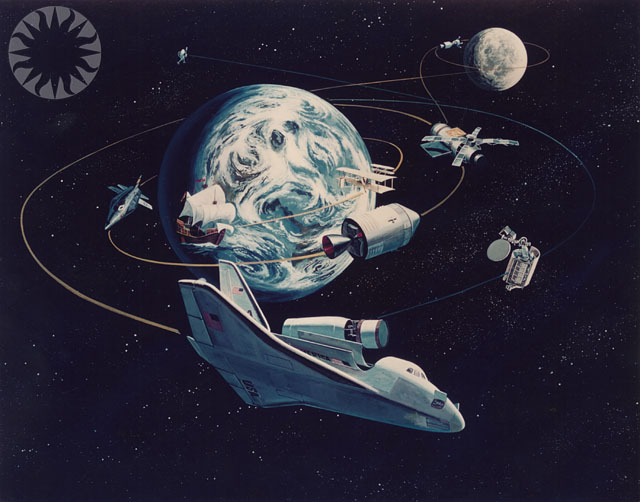
With the Shuttle Era coming to and end and space flight on indefinite hold, I though it would be good to highlight some of the technological achievements that led up to it.
• Wireless. AKA Radio. Nicoli Tesla's invention initially was just large high voltage sparks keyed on and off for Morse code and received crystal detectors. The "Cat's Whisker"
• The Vacuum Tube. The DeForest Audion to be precise. Wireless or radio was invented by Nicoli Tesla but the vacuum tube really made it take off like gangbusters. By the 1930s anyone who could have a radio station, put one on the air. And there were a slew of companies making radios. Even Firestone Tires. And by the 1940s radio was nearly everywhere. From big gigantic console models to very expensive models with chrome plated parts to battery operated units for farms that still did not have electricity.
• Talking Pictures. Made possible by the vacuum tube. The first systems were rather crude using a very large disk or record which was mechanically synced to the film - Warner Brothers Vitaphone. But a sound on film technique was soon developed and became the standard.
• FM Radio. Unlike the AM that was use, FM offered sound that was free of static and well suited for local broadcast and point to point communications. Major Edward Armstrong's invention would find wide use and become the mode of choice for entertainment broadcasting.
• Television. Philo Farnsworth invented the first practical system to transmit and receive moving pictures. Though it would not be commercially available in mass until after WWII. It was used during the war even in the first drone aircraft.
• WWII. Yes the war itself was responsible for a number of advances in technology. Most especially electronics. There was radar and computers (the British Colossus used to break the Nazi Enigma code) and Loran navigational system and major advances in vacuum tube technology and communications utilizing frequencies int the VHF and UHF bands there were not thought useful before the war.
• The Transistor. The germanium point contact transistor invented by two engineers at ATT. originally licensed to Raytheon and Texas Instruments. The first transistor portable to hit the market was the Regency. Two Japanese engineers came over and toured the ATT and Texas Instruments facilities and returned and convinced their government to fund a licensing agreement with ATT to manufacture them in Japan. They formed a company called Sony and began making and selling transistor portable radios. They also came up with a way to make them in larger numbers and cheaper. Sony came out with one of the first Transistor portable TVs in 1960. The TV8. [ My grandfather had one and showed it to me]
• Color Television. Everybody was working on a system. In Briton is was the Telechrom system. CBS had their line sequential system. RCA and Philco were both working on a dot sequential system. The RCA system finally won out. Partly because they had more money to invest in it. Partly because they were further along. Partly because they owned a major network (NBC). But mostly because they had political connections.
• Sputnik. The Soviet Union was the first to launch a satellite into earth orbit. This was an earthquake. We are talking a major but major big deal. We in the west were caught with out pants down and a kick me sign taped to our rear ends. And anyone and everyone who had a radio that could receive its Beep Beep Beep signal on 20 MHZ was listening for it. From the big communications receivers to that old multiband radio of grandpa's. But with the help of Dr. Werner van Braun, we managed in 1957 to launch Explorer 1. The space race was on. From the up and down flights to orbiting the planet to men on the moon to an orbital space station.
• The Silicon Transistor. Shortly after the invention of the Germanium transistor another Bell System Physicist came up with a method of using silicon for transistors. By the early 1960s germanium was a thing of the past.
• The Digital Computer. There were many that were made for various special uses but the first real general purpose computer was ENIAC. Made for the US Army. By the 1960s RCA, GE, Zerox, IBM, Univac, Nation Cash Register and others were making computers. By the end of the 1970s most had dropped out of the computer market leaving IBM and UNIVAC and a few others making big computers. But by the 1980s big computers would become a thing of the past as well giving way to the new microprocessor based computers.
• The Integrated Circuit. The logical follow on to the transistor. Putting many, many, many transistors in on package made everything much smaller and cheaper.
• The Microprocessor. An entire computer processing system on one chip. Small, faster, more efficient that the big mainframes. Making the mainframe look like dinosaurs. I would say that the microprocessor is the last real major technological leap we have made. And they are now everywhere.
I am sure I left out a number of smaller advances. In recording technology and medical technology and robotics. All necessary. Further space exploration though will require some additional tech break throughs though. In propulsion and space craft shielding and other places. All still quite far off I am afraid. But I am sure a couple of guys or gals in some lab somewhere will come up with the answer at some point.
Comments
How about Hedy Lamarr and 'frequency hopping', which was the basis for much of the wireless technology we use today. http://www.women-inventors.com/Hedy-Lammar.asp
One of my favorite stories about the rivalry between David Sarnoff and William Paley is when Paley called Sarnoff to his office, and when he arrived Paley put on a record, then went back to his desk and started chatting with Sarnoff. At the time, 78's usually lasted only about 3 minutes. The two men talked for a while, and Sarnoff began looking over at the record player every so often. Paley just kept talking and the record kept playing. After ten minutes Sarnoff couldn't help but stare at the record player as the music was still playing. Paley kept talking. After about 20 minutes, Paley quietly got up, and went to the record player. He said, Oh by the way, what do you think about this new project my people have been working on? It's a 33 rpm long-playing record and we're releasing our first ones tomorrow. Sarnoff was livid, but congratulated him, left his office, drove straight to the RCA labs and demanded his people create something overnight to out-do his rival. The next day, RCA announced the invention of the 45 rpm record.
Paley may have won that round, but Sarnoff got his revenge in the fight over Color television technology. In the very early days the best color system was one invented by CBS, the RCA color system was mediocre by comparison. The main thing the RCA system had going for it was that it was compatible with black and white TV technology and the CBS system wasn't. So when the fight went to the FCC as to which system to approve as the industry standard, the FCC initially chose the CBS system, which meant all black and white televisions would be obsolete, and TV wouldn't have had that decade of black and white TV, it would have been in color from the beginning , but RCA had a plan: While stalling and going through legal appeals, RCA managed to flood the market with black and white TVs and then appealed to the FCC that too many people would have to buy new TVs ... so the FCC reversed their initial decision and made the RCA color system the standard. American exceptionalism. hahaha
by MrSmith1 on Fri, 07/22/2011 - 1:13pm
That can't be true:
by Donal on Fri, 07/22/2011 - 1:30pm
I love Calvin and Hobbes. Thanks for reminding me why.
by MrSmith1 on Fri, 07/22/2011 - 2:00pm
For some strange reason, I can't help but imagine Calvin is asking a tea-bagger what the deficit ceiling is and why he won't vote to raise it.
by Beetlejuice on Fri, 07/22/2011 - 2:49pm
Sorry forgot. Like I said I probably left stuff out. A variation on this was developed at MIT for cold war secure communications. It was designated F9C.
And a modified version of the CBS system became PAL used in the UK and part of Europe for colour.
by cmaukonen on Fri, 07/22/2011 - 5:31pm